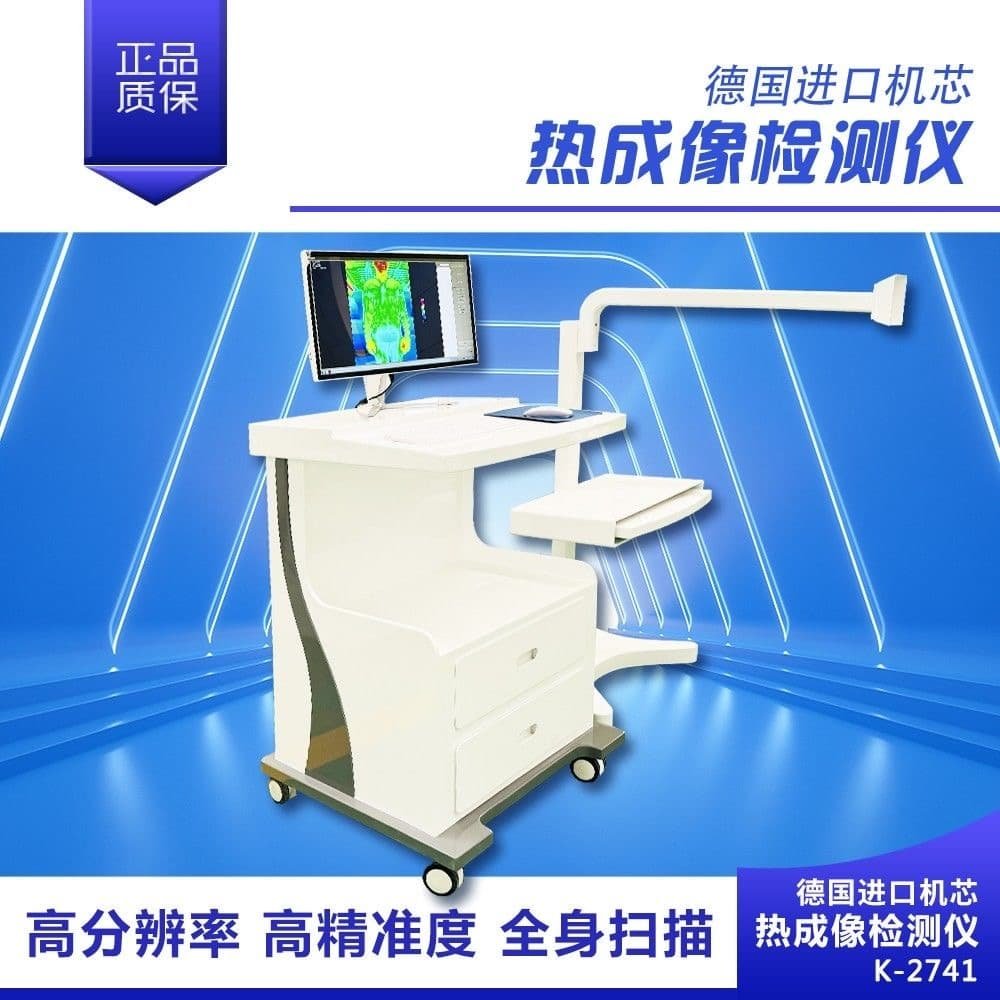
Healthcare has advanced significantly in recent decades, with technological innovations driving improvements in diagnosis, treatment, and patient care. One of the most exciting breakthroughs in modern medicine is the thermal imaging detector—a device that leverages the science of infrared radiation to transform how we assess and monitor health. By understanding the science behind this groundbreaking technology, we can appreciate its potential to revolutionize healthcare and improve outcomes for patients worldwide.
The basic principle behind the thermal imaging detector is simple: all objects emit infrared radiation, and the amount emitted is proportional to their temperature. The human body maintains a relatively constant core temperature, but surface temperatures vary across regions, creating a unique thermal profile. This profile, known as the body’s thermal field, directly reflects underlying physiological activity, including blood flow, metabolic rate, and tissue health.
When the body is healthy, its thermal field is stable and consistent. However, abnormalities—such as inflammation, infection, lesions, or poor circulation—alter this thermal field. For example, inflamed tissue has a higher temperature than surrounding healthy tissue, while areas with poor circulation may be cooler. The thermal imaging detector captures these subtle temperature variations using advanced infrared scanning technology, which is highly sensitive to infrared radiation.
Once infrared radiation is captured, the detector converts it into an electrical signal, which is then processed to create a high-resolution thermal image. These images use a color scale to represent temperature variations—warmer colors (e.g., red, orange) indicate higher temperatures, while cooler colors (e.g., blue, green) indicate lower temperatures. This visual representation makes it easy for healthcare professionals to identify anomalies and assess their location, size, and severity.
One of the key scientific advancements making the thermal imaging detector so effective is its high sensitivity and resolution. Modern detectors can detect temperature variations as small as 0.01°C, enabling them to capture even the subtlest changes in the body’s thermal field. This level of sensitivity is crucial for early detection, as many health conditions manifest as minor temperature changes before symptoms appear.
Another important scientific aspect of the thermal imaging detector is its ability to perform full-body functional testing. Unlike structural imaging tools such as X-rays and CT scans, which focus on anatomy, thermal imaging provides insights into bodily function. This means it can detect issues at a cellular level, before structural damage occurs—making it an invaluable tool for preventive healthcare, as it enables early intervention and treatment.
The thermal imaging detector’s design also contributes to its scientific effectiveness. Measuring 1400mm (L) × 600mm (W) × 900mm (H), it’s engineered to capture full-body thermal images in a single scan. This ensures no bodily area is missed and the thermal field is accurately captured. The device’s advanced optics and sensors work together to produce clear, detailed, and reliable images, providing healthcare professionals with the data needed for accurate diagnoses.
In clinical settings, the thermal imaging detector complements traditional diagnostic methods. For example, in dermatology, it helps identify skin conditions like psoriasis, eczema, and even skin cancer by detecting abnormal temperature patterns. In rheumatology, it assesses arthritis severity and monitors treatment effectiveness by tracking inflammation levels. In cardiology, it detects poor circulation and potential heart issues by analyzing thermal patterns in the chest and extremities.
The science behind the thermal imaging detector also makes it a valuable research tool. By studying thermal patterns in large populations, researchers gain insights into early disease signs, develop new diagnostic criteria, and improve treatment protocols. This research has the potential to advance healthcare practices worldwide, leading to better patient outcomes and reduced healthcare costs.
As technology continues to evolve, the thermal imaging detector is likely to become even more powerful. Future innovations may include enhanced sensitivity, faster scanning times, and integration with artificial intelligence to automatically identify anomalies. These advancements will further strengthen the device’s ability to revolutionize healthcare, making it an even more essential tool for clinicians, researchers, and patients alike.
In conclusion, the thermal imaging detector is a product of cutting-edge science with the potential to transform healthcare. By leveraging the properties of infrared radiation, it provides a non-invasive, accurate, and comprehensive way to assess functional health, detect early disease signs, and monitor treatment outcomes. As we continue to explore and refine this technology, we can look forward to a future where healthcare is more preventive, personalized, and effective—all thanks to the science behind the thermal imaging detector.